
Call us now :07971459465
 Send Inquiry
 Send Inquiry
Strapping Hand Tools
Price 5000 INR/ Piece
MOQ : 1 Piece
Strapping Hand Tools Specification
- Power Source
- Manual
- Features
- Easy Operation, Durable Construction, Portable
- Surface Finish
- Polished/Coated
- Motor Power
- Not Applicable (Manual Tool)
- Tensile Strength
- Suitable for up to 5000 N
- Function
- Tensioning and Sealing Straps
- Grip Type
- Non-Slip Grip
- Gauge
- Standard
- Usage
- Industrial
- Tool Type
- Strapping Tools
- Material
- Steel
- Handle Material
- Rubber Coated Steel
- Product Type
- Strapping Hand Tools
- Shape
- Ergonomic Lever Design
- Dimension (L*W*H)
- 240 mm x 60 mm x 90 mm
- Warranty
- 1 Year
- Compatible Strap Width
- 12 mm - 19 mm
- Color
- Green and Silver (with Red Handle Grips)
- Corrosion Resistance
- Yes
- Operating Temperature Range
- -5C to 50C
- Weight
- 1.2 kg
- Application
- Packaging, Strapping, Carton Sealing
Strapping Hand Tools Trade Information
- Minimum Order Quantity
- 1 Piece
- Payment Terms
- Cash in Advance (CID), Cheque, Cash Advance (CA)
- Supply Ability
- 100 Pieces Per Week
- Delivery Time
- 1 Week
- Main Domestic Market
- All India
About Strapping Hand Tools
Hand Tools are controlled by hand as opposed to an engine. Classifications of hand instruments incorporate wrenches, forceps, cutters, striking apparatuses, struck or pounded. Apparatuses, screwdrivers, tight clamps, clips, cuts, saws, drills and blades. Open air instruments, for example, cultivate forks, pruning shears, and rakes are extra types of hand apparatuses. Hand Tools are not hand devices. Locking pincers, mole holds (mole torque) or tight clamp grasps are forceps that can be bolted into position, utilizing an over-focus activity. One side of the handle incorporates a jolt that is utilized to modify the dividing of the jaws; the opposite side of the handle (particularly in bigger models) regularly incorporates a lever to push the two sides of the handles separated to open the forceps.
Key Features of Strapping Hand Tools:
- Securing forceps are accessible various designs
- They additionally come in numerous sizes
- Lever activity is more grounded than that of normal forceps
- They can apply considerably more power than different apparatuses
Ergonomic and Durable Construction
Featuring an ergonomic lever design and high-quality steel materials, this strapping hand tool prioritizes user comfort and long-term durability. The non-slip rubber-coated handle ensures maximum control during tensioning and sealing processes, reducing operator fatigue during extended use.
Versatile and Reliable Performance
Compatible with strap widths from 12 mm to 19 mm, this tool is well-suited to a broad range of industrial packaging tasks. Its corrosion-resistant, polished surface and robust construction deliver dependable results even in demanding conditions, ensuring your packaging is consistently secure.
Designed for Safe and Efficient Operation
This strapping tool offers manual tensioning and sealing without the need for electricity. Its lightweight build (1.2 kg) and easy-operation features make it portable and simple to use, allowing operators to work efficiently in various warehouse and industrial settings across India.
FAQ's of Strapping Hand Tools:
Q: How do you operate this strapping hand tool?
A: To use the tool, insert the strapping material (between 12 mm and 19 mm wide) into the device, then apply tension using the ergonomic lever. Once the strap is tight, seal it securely using the built-in sealing mechanism. The non-slip grips and ergonomic design make the operation comfortable and efficient.Q: What types of packaging applications is this tool suitable for?
A: This strapping tool is ideal for packaging, strapping, and carton sealing tasks in industrial settings. It is specifically designed to secure boxes, bundles, and pallets, making it useful for warehouses, manufacturing, and shipping operations.Q: When is it appropriate to use this manual strapping tool instead of an automatic one?
A: This tool is best employed when portability, power independence, and quick on-the-go packaging are priorities. It is perfect for smaller operations, locations without access to electricity, or when versatility is essential for varying strap widths between 12 mm and 19 mm.Q: Where can this strapping tool be used effectively?
A: The tool can be used effectively in industrial environments, warehouses, shipping centers, and packaging facilities across India. Its corrosion resistance and wide operating temperature range ensure it performs reliably under diverse conditions.Q: What is the expected process for tensioning and sealing straps?
A: Insert the chosen strap, tension it manually using the lever until the desired tightness is achieved, then engage the sealing mechanism to fix the strapping securely. This simple manual process ensures robust sealing without the complexity of powered machinery.Q: What are the main benefits of using this strapping hand tool?
A: Key benefits include its durable, corrosion-resistant construction, ergonomic grip for reduced fatigue, compatibility with various strap widths, and reliable performance in harsh environments. Its portability and manual operation offer flexibility and cost-effectiveness for industrial packaging tasks.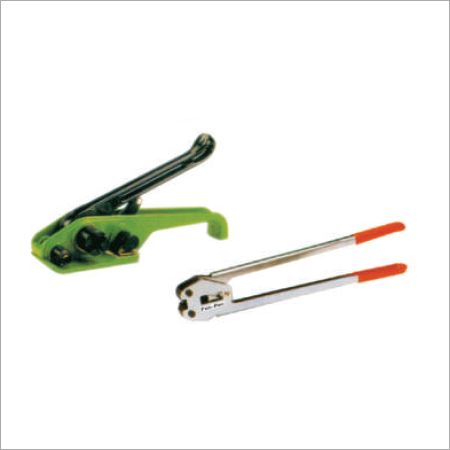
Tell us about your requirement

Price:
Quantity
Select Unit
- 50
- 100
- 200
- 250
- 500
- 1000+
Additional detail
Mobile number
Email

More Products in Hand Tools Category
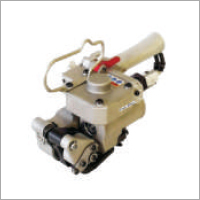
Pneumatic Strapping Tool
Price 25000.00 INR / Unit
Minimum Order Quantity : 1 Unit
Product Type : Pneumatic Strapping Tool
Warranty : 1 Year
Power Source : Electric
Color : Grey


 Send Inquiry

Our Products
- Corrugated Strapping Machine
- Strapping Machine
- Carton Taping Machine
- Corrugated Squaring Machine
- Carton Wrapping Machine
- Stretch Wrapping
- Stretch Wrapping Machines
- Shrink Wrapping
- Shrink Wrapping Machines
- Hand Tools
- Semi Automatic Strapping Machines
- Automatic Sealing Machine
- Automatic Strapping Machines
- Stretch Shrink Wrapping
- Heavy Duty Tensioner
- Automatic L Bar Sealer With Shrink Tunnel
- Automatic Middle Speed Sealing Machine & PE Shrink
- Packing Conveyors
- Packaging Machinery
- Consumable
- Carton Machines
- Fully Automatic Strapping Machine
- Semi Automatic Carton Taping Machine
- Automatic Carton Taping Machine
- Carton Erector
- A9 Series Automatic Strapping Machine
- A8 Series Automatic Strapping Machine
- A-9 Series Fully Automatic Strapping Machine
- A-8 Series Fully Automatic Strapping Machine
- Corrugated Machine
- Strapping Hand Tools
- Horizontal Stretch Wrapping Machine
- Drinking Straw
- PET Strapping Roll


19/21, Shakti Nagar, Delhi - 110007, India

Mr. Sanjeev S Arora
(Director)
Mobile :07971459465
 Send Inquiry
 Send SMS
 Call Me Free
Developed and Managed by Infocom Network Private Limited.


 English
 Spanish
 French
 German
 Italian
 Chinese (Simplified)
 Japanese
 Korean
 Arabic
 Portuguese